Program at a glance
Credential
Master's
Faculty
Faculty of Science
Department
Data Science
Duration
2 Years
Program Delivery
On Campus
Location
Kamloops, B.C.
Program overview Design Tomorrow’s Technology
The amount of data in the world has exploded and so has the demand for trained scientists and analysts.
Data scientists use mathematical, computational, statistical and algorithmic techniques to solve analytically complex data problems. In our Master of Science in Data Science (MScDS), you will engage in research and hands-on applications of data science in the classroom and through industrial projects, using cutting-edge techniques and algorithms. You will work on models of practical, existing problems to prepare you for situations you may encounter on the job and in the world.
Apply Today
From code to career Real-world learning focus
The potential of big data comes with challenges and opportunities, as described by Canada's Big Data Consortium in the report Closing Canada's Big Data Talent Gap:
"Bold promises have been made for Big Data and Analytics (i.e., data science): exceptional customer insights; better decision-making; improved productivity and performance; and product and service innovation."But the promise of Big Data and Analytics faces a key constraint: a talent gap that is felt across all of Canada’s regions, sectors, and industries.
Our program builds upon the existing strengths of TRU’s Department of Mathematics and Statistics, Computing Science, and the Centre for Optimization and Decision Science at TRU, as well as the collaboration with other departments across campus and industry. Whether you’re advancing your career, pivoting into tech or preparing for doctoral studies, the Master of Science in Data Science (MScDS) empowers you to shape the future.

Graduates are equipped to:
- Use data investigation tools, including data cleaning, sampling, management and exploratory analysis.
- Use data exploratory methods to visualize high-dimensional data to identify trends and patterns in data sets.
- Implement foundational concepts of data computation: data structure, algorithms, simulation, and analysis.
- Integrate the techniques from mathematical modelling, optimization, machine learning, data mining and applied statistics to model big data sets to a workable frame for further data investigation.
- Apply advanced data analytical methods and algorithms to large data sets to extract meaningful insights.
- Design an analytic strategy to model a potential issue and find a knowledgebased solution for real-world challenges using public and private data sources.
- Communicate results of data analysis effectively (visually and verbally) to a broad audience.

Admission
Seats are limited, so applicants are encouraged to apply early. We process applications on an ongoing basis and will stop accepting applications when all seats are filled.
Admission detailsAdmission requirements
Successful candidates shall have strong backgrounds in Statistics and Computing Science. Ideal candidates would have a degree majoring in Statistics, and minoring in Computer Science or vice versa. At the least, we expect students to have several dedicated undergraduate courses in Statistics and several dedicated undergraduate courses in Computer Science. Note that most of applied statistical courses in engineering or MOOC statistical courses will not be considered to be eligible.
All Admission Requirements Knowledge PreparationApplication deadlines
Domestic Students: August 1, 2026
International Students: January 15, 2026
Applications received after January 15 may be considered, but no extensions for paperwork like study
permits, will be granted.
Ready to get started?
Apply Today
Program description
The Master of Science in Data Science (MScDS) is a two-year program. The goal of the program is to provide students with solid knowledge, techniques, and experience in the research and application of data science, and to prepare students to become researchers and leaders in the emerging area of data science at the regional, national and global levels.
The program is unique in that it can be an application-orientated or a research-orientated master’s program depending on whether you choose the Graduate Project / Course based option or the Graduate Thesis option. Regardless of your choice, you will develop the strong data analytics, critical thinking, communication and interpersonal skills required for success as a data scientist in big data or to pursue further advances in research.
Program StructureEmployment opportunities
The demand for professionals with modelling and data analytics skills is very high now and will be even greater in the near future. Employment opportunities for graduates are in the areas of:
- Data Scientist $80,975* - $130,222
- Data Engineer $99,820* - $163,792
- Data Analyst $60,009* - $86,331
- Senior Data Analyst $81,933* - $147,719
- Business Analyst $73,085* - $8,3010
- Senior Business Analyst $91,279* - $143,108
(*Average of starting salary in Canada, based on Indeed Salary guide, June 30 2022)
Student testimonials What Are Students Saying About MSc Data Science?
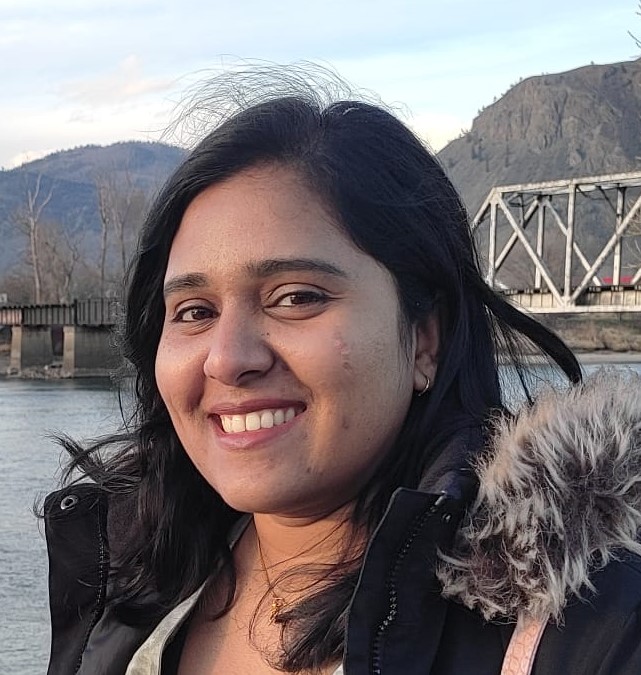
"The flexibility in choosing directed studies and the funding received for research were great additions to this course. In addition to the core courses, we were able to attend a series of seminars, which opened my eyes to how truly interdisciplinary is data science. I realized that there are many areas in my career that I could pursue should I want it. The availability of so many parttime jobs on the campus was unexpected and a welcome bonus for an international student. The weather in Kamloops turned out to be quite nice compared to other parts of Canada."
- Bhavithry Sen Puliparambil
Graduate, M.Sc. in Data Science
Intern Research Associate at TRU
Governor General’s Academic Gold Medal Winner
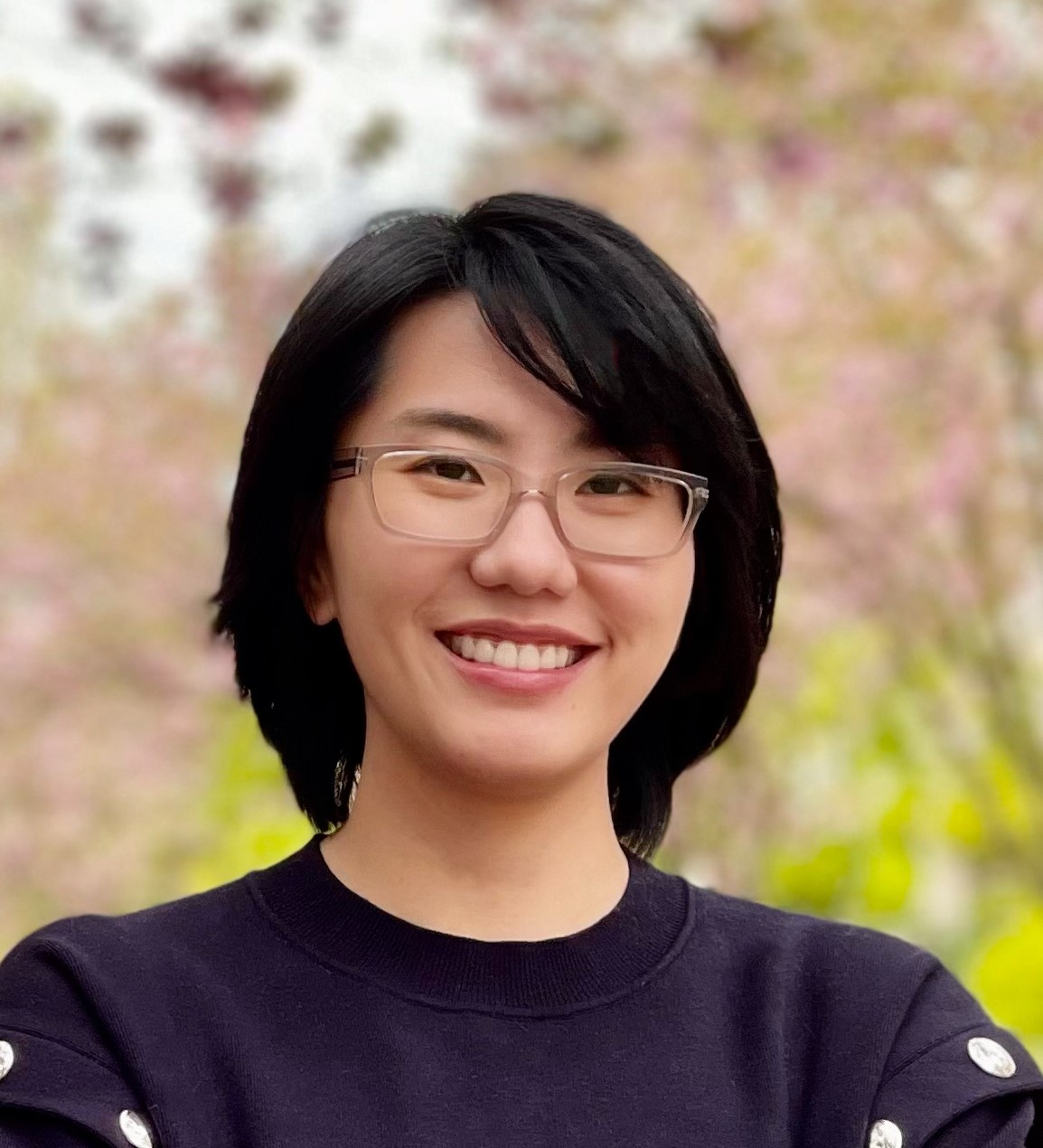
"The program curriculum setting is one of a kind. I like teaching the topics that are on demanding and in-depth.
We had the graduation presentation day, many professors were there to show support for students. After the presentation, we took the photo together and they all congrat me on my achievements. This memory is warm and beautiful to me."
- Yingshuo Li
Graduate, M.Sc. in Data Science
Risk Analyst
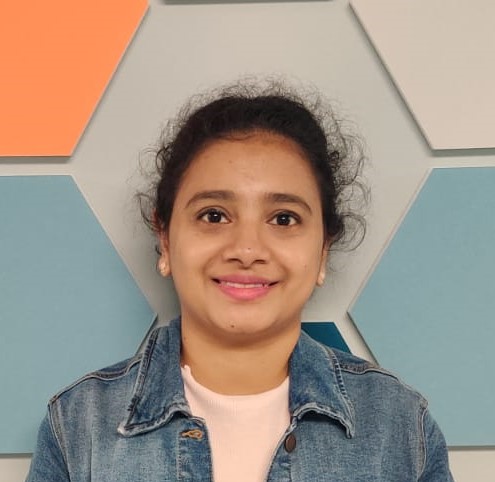
"My time at TRU has helped me gain confidence, and I'm not frightened of taking on new tasks. Now I'm a more confident mother and committed to achieving my career objectives.
My project supervisor guided me throughout my project work, it was a wonderful experience. I have been given the opportunity to work as a research assistant under supervision, where I was able to hone my technical abilities."
- Tejaswini Masina
Teaching Assistant, M.Sc. in Data Science
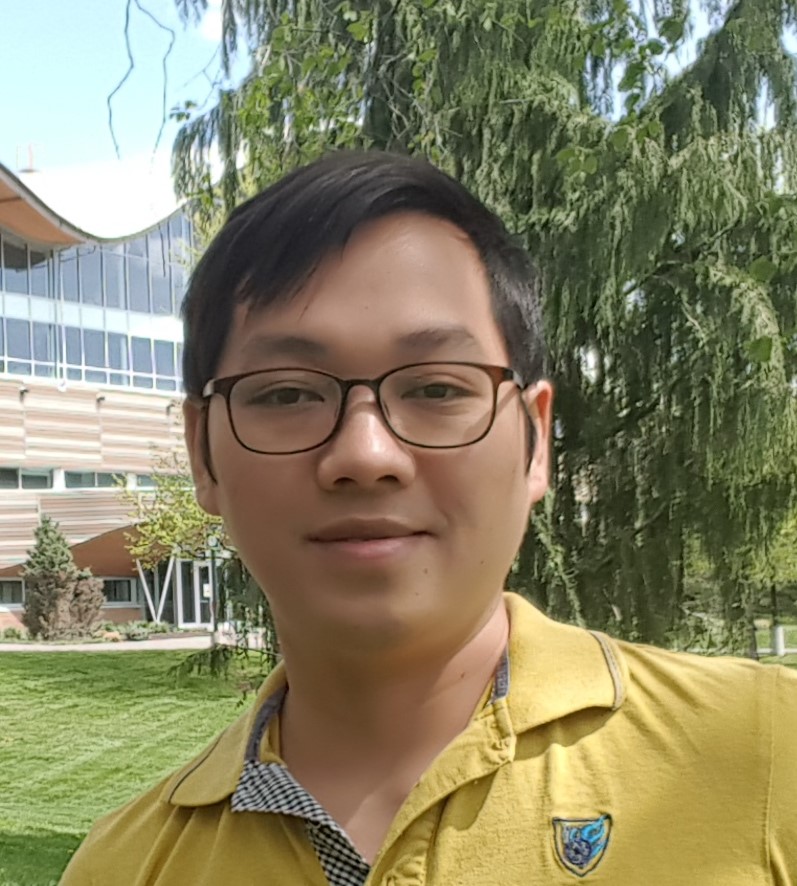
"TRU is a great place to enjoy your studying period. They have many buildings open to all students to come to study and very kind and enthusiastic professors.
During my graduation project, I received enthusiastic help from my supervisors. They helped me to complete my project, how to give a good presentation defense, and check the quality of the final report."
- Quoc Thanh Pham
Graduate, M.Sc. in Data Science
Frequently asked questions
Questions about the program
What is the duration of the full-time MScDS program?
The MScDS program normally requires two years (four semesters) for completion. However, students may receive exemption for a maximum of three courses (up to nine credits) in the MScDS program based on an individual assessment of equivalent graduate courses taken at an acceptable institution with a minimum grade of B (GPA 3.0) or higher in each course, consequently can be completed in three semesters. The assessment is conducted by the MScDS Admission Committee and the program coordinator.
What other costs should I expect to pay during the program?
Students are required to have a laptop computer. See how other costs can be estimated.
Do I have to choose an option when applying? Which option should I choose, graduate project / course based or thesis?
Yes, every student must identify his/her option in the application. Be aware that choosing Thesis Option requires more time in the application process, so students are strongly advised to start early (please see the section Admission for more advice, in Admissions).
The Project Option/ Course Based is for students who want to have non-academic career and to seek employment in industrial/applied-oriented. The Thesis Option is designed to help students who pursue the research and further graduate studies in data science, computer science or related areas.
The Project Option is for students who want to have non-academic career and to seek employment in industrial/applied-oriented.
The Thesis Option is designed to help students who pursue the research and further graduate studies in data science, computer science or related areas.
Can I switch between two graduate options after entering the program?
Because it is mandatory to have a supervisor for thesis students and finding a supervisor involves several steps and luck (e.g., shared interest in research or project with the supervisor, determine research topics and reach financial and research agreement, etc.), switching from Project Option to Thesis Option is possible, but may delay students’ program. On the other hand, switching from Thesis Option to Project Option will have relatively less complications. However, in either case, the switching will require an approval from the involved supervisor, MScDS Graduate Committee and the coordinator.
How do I choose a supervisor?
Having a supervisor is mandatory for thesis students. We encourage students to review faculty expertise, research topics, and previous research projects to identify potential supervisors early. It is also helpful to look for faculty members who share similar research interests. All faculty members available to supervise MScDS students can be found here.
Are there scholarships available for students?
Yes, please see the section of Scholarship and Funding here.
How long can I work in Canada after graduation?
This is a two-year program. Students who complete the program qualify for a three-year work permit after graduation.
Questions about application
How much time does it take to hear back on my application?
Applications are typically processed within four to six weeks of receiving all required information.
Is work experience a requirement for the application?
Work experience is beneficial but not required.
Can I use Duolingo as an eligible language requirement?
No, we only accept language scores for tests mentioned on the Admission Requirements page.
How do I apply?
Two steps: First, apply online. Second, send the required admission documents specific to your program to:
Domestic student: gradadmissions@tru.ca
International student: igrad@tru.ca
I am interested in the program — how can I speak to an advisor?
You can email, call or mail us. Here are the details.
I have been accepted — what's next?
- Complete the Acceptance of Offer form and return it to gradadmissions@tru.ca within 21 days of receiving your offer letter.
- Pay your tuition fees/deposit as outlined in your Letter of Acceptance.
- Inform gradadmissions@tru.ca when you have made the fee payment.
- Register for your courses, once you have received a registration package by email from the MScDS office.
- Become familiar with TRU policies and regulations:
- Attend program specific orientation.
- Attend campus-wide orientation and complete the New Student Checklist.
Contact us
Graduate admissions contact
For information about applications and admissions
Domestic students: gradadmissions@tru.ca
International students: igrad@tru.ca
Program contacts
Dr. Mohamed Tawhid
Graduate Program Coordinator
250-377-6041
MScDS-coordinator@tru.ca
Program Assistant
MScDS-admin@tru.ca