Research Computing Science
Programs
Research programs and projects conducted by our faculty members
3D Network-on-Chips Modeling and Optimization
NoC design, synthesis, and implementation
The research group aims at optimizing the design of on-chip interconnects for complex SoC systems. Using bio-inspired optimization algorithms, we study the impact of changing various design parameters on the system performance to find the optimum architecture of the on-chip network. The objectives are to maximize processor speed & system reliability and minimize energy consumption & implementation area.
Group Coordinator: Dr. Haytham El Miligi
Email: helmiligi@tru.ca
Phone: 250-828-5230

Applied Visualization
NoC design, synthesis, and implementation
The Applied Visualization research group at Thompson Rivers University makes use of visualization/animation techniques to solve problems around us including social problems with crimes, courts, seniors, etc. In particular, the research focuses on visual analytics on big data, agent-based modeling and simulation of criminal activities, and the use of virtual environments for crime studies.
Group Coordinator: Dr. Andrew Park
Email: apark@tru.ca
Phone: 250-371-5053
Mobile Application Development
Healthcare, home automation, education, and security applications
Mobile devices are becoming the most popular computing platform for most people. This research group explores possible solutions for mobile devices by developing apps for smartphones, tablets, smart watches, smart TVs, etc. This also includes improving the security of mobile devices and promoting low-power design strategies.
Group Coordinator: Dr. Haytham El Miligi
Email: helmiligi@tru.ca
Phone: 250-828-5230

Multi-Core Real-Time Systems
Scheduling, mapping , parallel programming, and performance evaluation
The research group explores possible solutions for several emerging design challenges of real-time multi-core systems. The goal is to identify, study, and propose solutions for these design challenges at two levels of the design hierarchy: system level and chip level.
Group Coordinator: Dr. Haytham El Miligi
Email: helmiligi@tru.ca
Phone: 250-828-5230

Security in Emerging Wireless Networks
Wireless sensor networks, body area networks, wireless ad hoc networks, radio frequency identification networks, near field communication networks, etc.
In recent years there has been explosive growth in the use of wireless networks for the Internet and local network access. This includes varieties of wireless connectivity, including infrared, cellular, WiFi, Bluetooth, 3G+, RFID, Wireless Sensor Networks, Near Filed Communication and WiMAX. These emerging wireless networks dramatically enhance the usefulness of small Internet-capable devices and services they provide. Security plays a crucial role in practically deploying such a network.
1. Investigation of vulnerabilities and mutual authentication protocols for RFID networks
In this project we investigate a variety of security vulnerabilities and existing solutions to mitigate those vulnerabilities and propose a new mutual authentication protocol suitable for RFID systems.
2. Developing a secure communication layer for Wireless Sensor Networks
In this project we develop a secure communication channel for WSNs on TinyOS platform using nesC. This secure layer will help applications to establish a secure conduit between communicating parties.
3. Cloud based application development for the “Climate Change Showdown” contest
The "Climate Change Showdown” is a contest for school kids to make them aware of the environmental impact. The program is run by the B.C. Sustainable Energy Association partnering with the City of Kamloops. In this project, we are helping them with a cloud-based software solution for managing the contest and sophisticated calculations involved in the process.
Research webpageGroup Coordinator: Dr. Musfiq Rahman
Email: mrahman@tru.ca
Phone: 250-371-5957

Software Engineering
The Software engineering research group at Thompson Rivers University aims at collaborating with industry by targeting applied research problems. Some of the leading areas of interests are large-scale software architecture such as software product line and software eco-systems, empirical software engineering, software process assessment, open source software, human factors in software development and green software code. Some of the projects we are currently working on are:
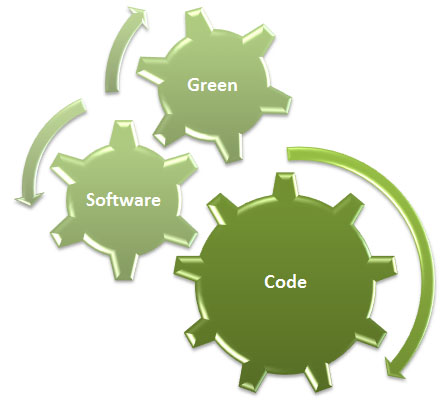
1. Software design complexity and green code
It has been constantly argued that environmental conditions are getting worse and worse over a period of time due to an increase in energy consumption. Much work has been reported in minimizing the use of energy in computer hardware, but very little work has been conducted in how to make software applications as green as possible, specifically from its design perspective. Complexity of software contributes significantly in the quality and maintenance work. In this project, we aim at empirically investigating the relationship of software design complexity and green software code.
2. Is open source software environment green? An empirical investigation
Our planet is facing serious environmental issues due to the constant increase in energy consumption, and waste from industry. The concept of green computing is receiving popularity in our society after the realization that reducing emissions can increase the age of our planet and help in improving the health of its inhabitants. The use of free and open source software is gaining momentum due to the ever-increasing availability and use of the Internet. In the recent past, many large software development companies have committed their efforts to open source projects, which gave momentum to this initiative. The objective of this project is to find out up to what extent the OSS environment is green and what efforts will further green the whole environment.
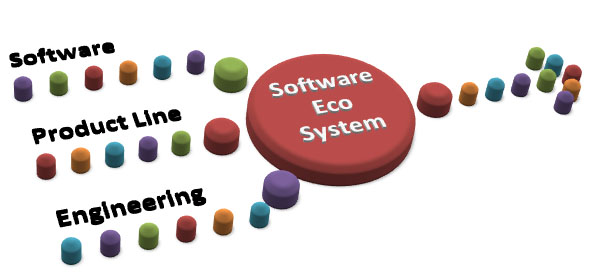
3. Transition from Software Product Line to Software Ecosystems
The software industry has successfully used the concept of software product lines and now a transition is in progress from product line to software ecosystem. The concept of a Software Eco System is gaining in popularity amongst large organizations and inherently relies on the adoption of common architectural development for multiple product development. The adoption of these approaches represents a significant shift in traditional software development style and process methodology. Currently several organizations are in practice with this new process model which embraces business, third party involvement and open architecture as its central pillars and these institutions have thrived as a result. Software ecosystem architecture defines the concepts, structures, and textures necessary to achieve variation in the features of diverse products while ensuring that the products share the maximum amount of parts in the implementation. There are a lot of research opportunities present in defining a representation for ecosystem architecture and a deep understanding of all of the necessary features of such representations. The objective of this research project is to propose an Architecture Description Language (ADL) for software ecosystems which will help in representing commonality and variability aspects of ecosystem architecture and further increase the traceability of product line and product specific requirements.
Group Coordinator: Dr. Faheem Ahmed
Email: fahmed@tru.ca
Phone: 250-371-5696